Filip Jurik

Technology is only powerful when people don’t notice it.

I design software, brands and intelligent systems that remove complexity—for universities, healthcare, products and growing businesses.

Creative Technologist

Branding · Web Design · Software · Automation

The difference

Great technology should feel invisible.

I don’t build websites. I design complete systems — from brand identity to software architecture, automation, AI, manufacturing and hardware, connected into one coherent experience.

About

I’ve spent my life chasing butterflies.

Read the story Close

Not because I expected to catch them all, but because curiosity has always led me somewhere worth going.

I grew up before technology became part of everyday life. Some of my favourite memories are of spending time with my grandpa, taking things apart and putting them back together.

Looking back, I don’t think I enjoyed fixing things. I enjoyed understanding them.

There was something deeply satisfying about seeing dozens of disconnected pieces become one working whole. I still get exactly the same feeling today.

Over the years I’ve worked across software, automation, industrial systems, branding, manufacturing, product design and artificial intelligence. The technology has changed dramatically, but my motivation never has.

I’ve never been interested in technology for its own sake. I’m interested in what happens when technology disappears.

When a system becomes so intuitive that people stop thinking about the software and simply focus on their work. When complexity becomes clarity. When frustration quietly fades into confidence.

I enjoy making complicated things simple—and making simple things disappear.

Some of my favourite projects began with someone saying, “This probably isn’t possible…”

The most rewarding projects aren’t the ones with the most features or the biggest budgets. They’re the ones where someone says, “That just makes sense.” Those are the moments that remind me why I started building in the first place.

I also believe that many of the world’s problems don’t begin with technology—they begin with misunderstanding. If I could quietly change one thing, it would be to help people understand one another a little better. Better software, better products and better businesses all start with the same skill: listening before solving.

Today I still approach every project with the same curiosity I had as a child, taking things apart with my grandpa.

Only now, instead of rebuilding machines, I rebuild systems, experiences and ideas.

And I’m still chasing butterflies.

Practice

  • Windows environments
  • FileMaker systems
  • UX & branding
  • Home automation
  • AI systems
  • Oxford / higher ed

ITIL Foundation

Languages

  • English
  • Czech
  • Slovak
  • Polish

Principles

  1. 01Understand deeply.
  2. 02Remove complexity.
  3. 03Design naturally.
  4. 04Keep improving.
30 years Building technology across healthcare, education and products
Oxford Campus systems at BSG, Wadham and the wider University
Apple · JAMF Certified Apple environments and campus device platforms
Systems + brands Internal tools, maps, commerce and identity work

Path

The journey

  1. Earlier

    Private sector

    Trade Hydro — IT and marketing leadership, graphic design and digital presence in one practice.

  2. Healthcare

    NHS infrastructure

    Bradford District Care Trust — project leadership transforming infrastructure and support that had to stay reliable.

  3. Oxford

    Campus systems

    BSG Systems Development Manager (2018–2024) and Wadham campus tools — after consulting roles at Pamoja and GMC Software across Europe.

  4. Products

    Brands & commerce

    Consumer-facing sites and identities — from Trade Hydro’s digital push to Shopify and WooCommerce brand experiences.

  5. Today

    Complete systems

    Architecture, UX, automation and strategy as one craft — based in Oxford.

Evidence

Projects

A sample of systems, products, identities and digital experiences I’ve designed and built — from university tools to consumer brands.

Limited footwear

Ninenine

Each design ends at 99 pairs.

Visit ninenine.co.uk
Oxford · Link Platform

Wadham Links

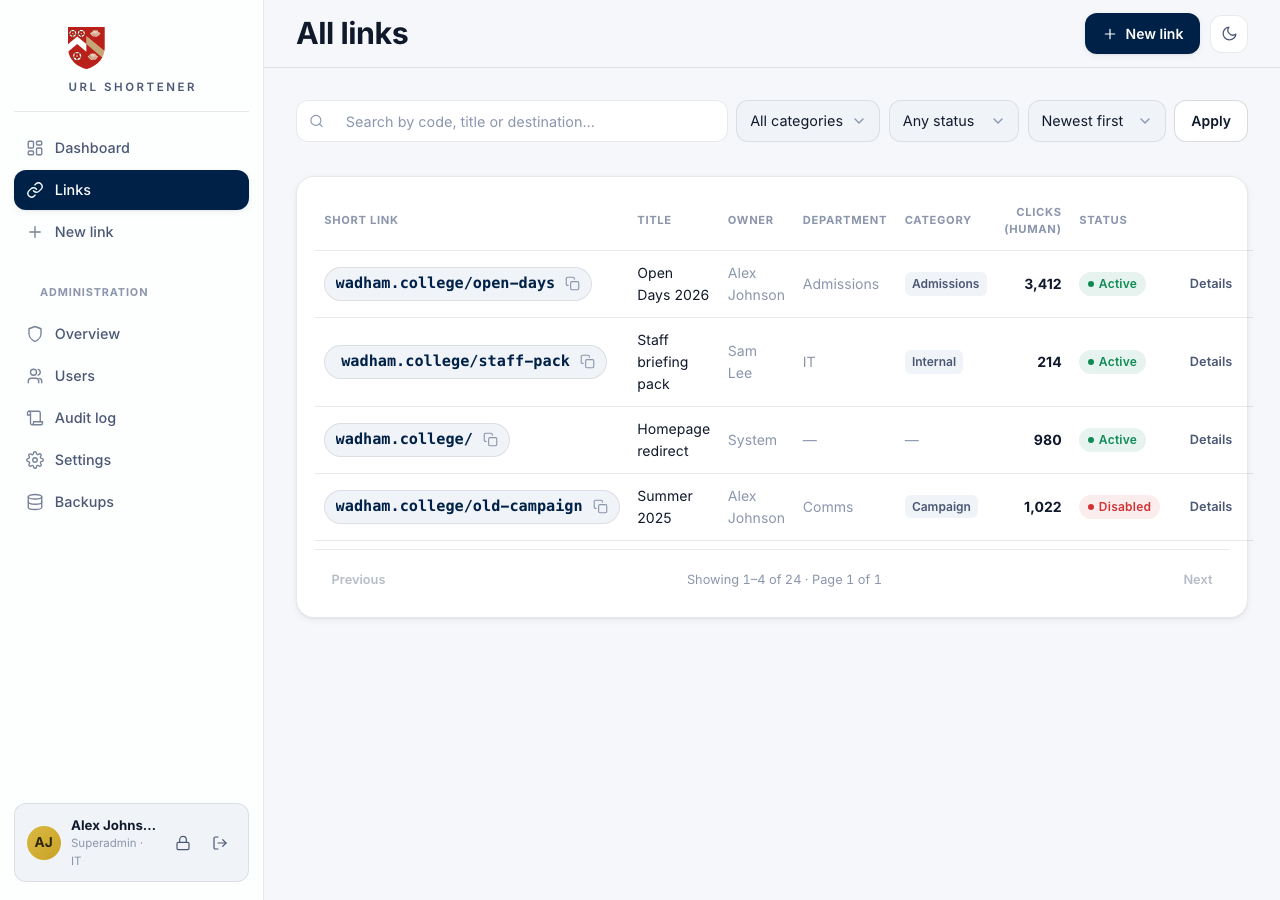
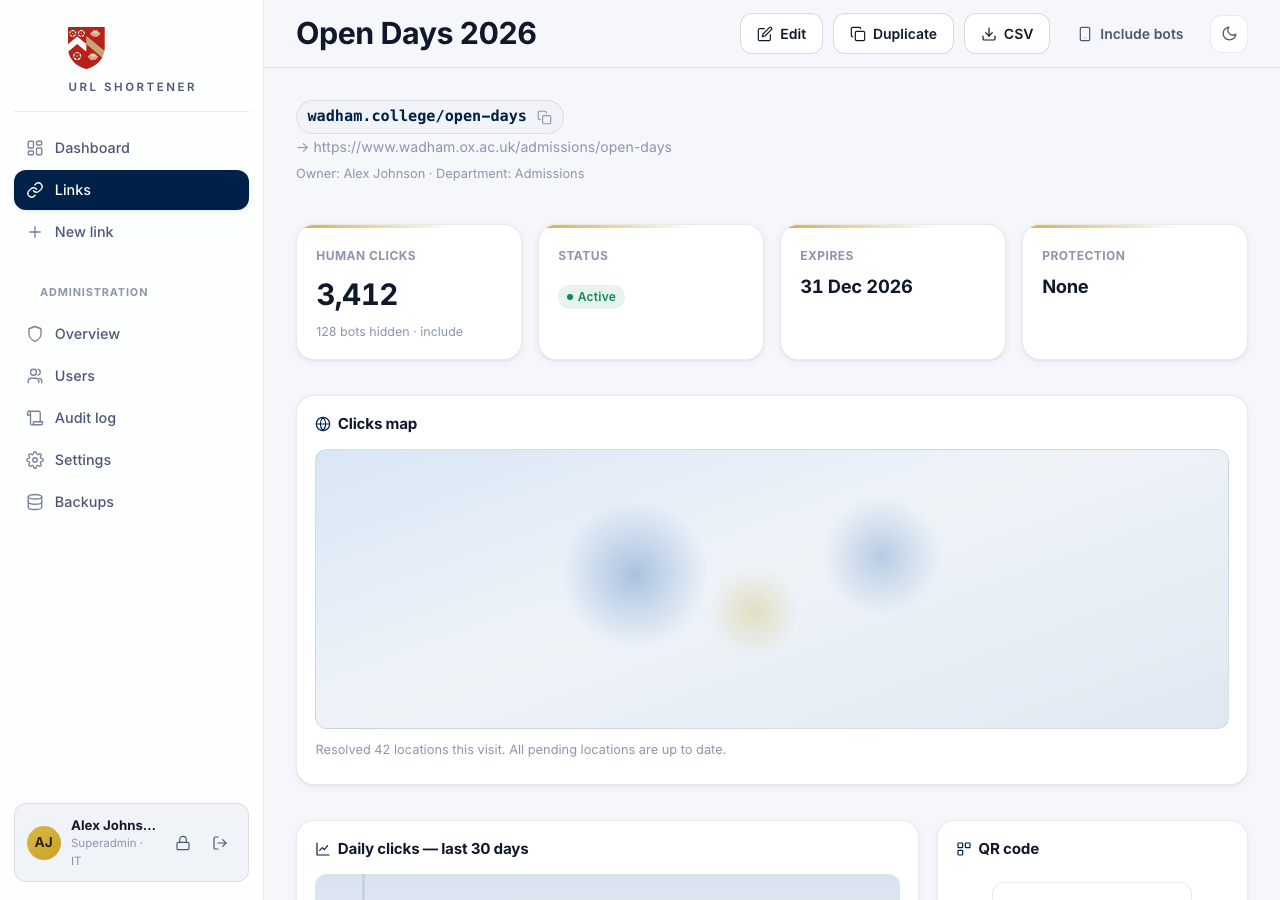
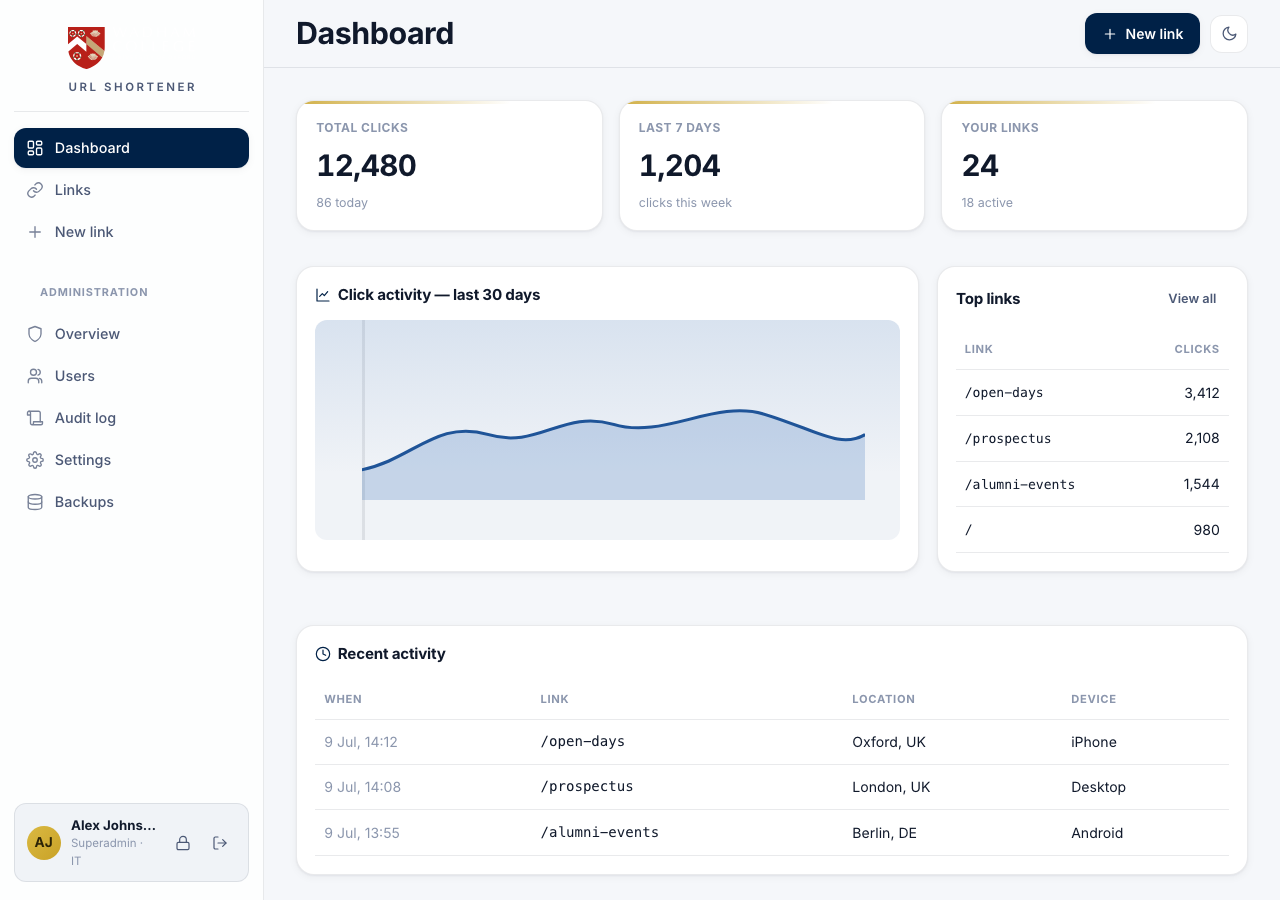
A secure, branded link-management platform for short links, QR codes and campaign analytics — with role-based access and audit-ready administration.

Problem
Internal teams share links every day, but without branding, measurement or governance those clicks stay invisible and unmanaged.
Solution
Wadham Links turns everyday sharing into a managed experience — custom short codes, QR codes, detailed analytics, and admin controls that stay audit-ready.
Stack
Branded short links · QR codes · Analytics · Role-based access · Audit log
Impact
Communications teams create, measure and control campaigns in one place — from open days to internal briefings.
wadham.college
Wadham College campus systems — map, library and digital support
Oxford · Campus Systems

Wadham Campus

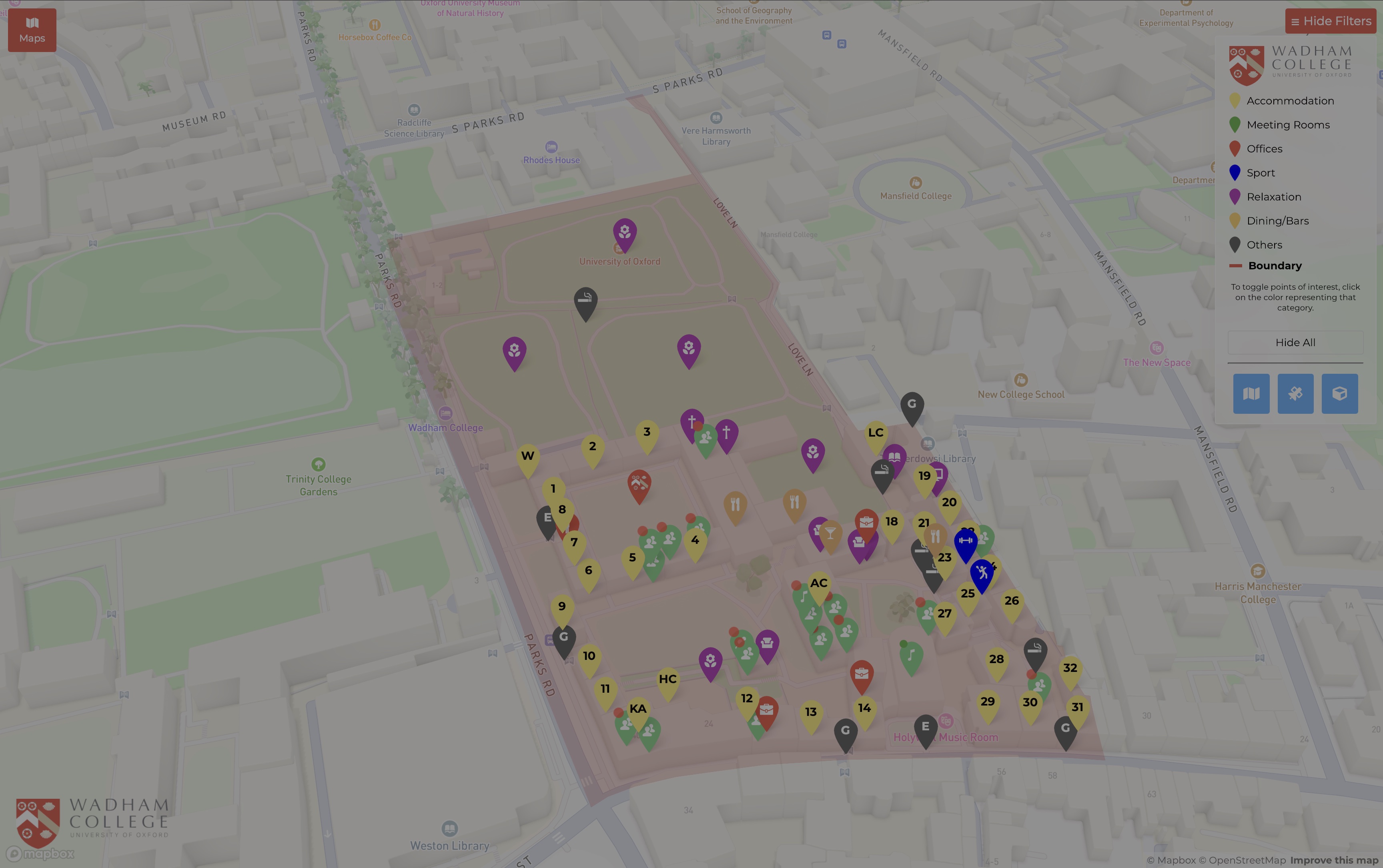
Oxford campus systems for orientation, library guidance and digital support — Map, Library guide and Help centre as one practice.

Problem
Students, staff, guests and visitors needed clear paths for finding places, using the library and connecting to the right Wi-Fi — without tribal knowledge or technical rabbit holes.
Solution
A connected set of campus tools: interactive map, scannable library guide and a digital support hub that routes people by who they are.
Stack
Interactive map · Information design · Help centre · Campus web
Impact
Orientation, library access and network setup became self-serve — fewer interruptions for staff and clearer journeys for everyone else.

Healthcare · Local Business

Pedichelle

A practitioner site built to earn trust before the first appointment.

Problem
New patients need confidence before they book — unclear sites lose them at the first look.
Solution
A calm, clear practitioner presence that explains care and makes getting in touch feel safe.
Stack
Website · Local business · Trust-led UX
Impact
Builds trust before the first appointment.
pedichelle.co.uk

Identity

Logos & marks

Brand identities designed over the years — marks for products, studios, platforms and local businesses.

  • Wadham Campus

    Orientation, library and network setup became self-serve — fewer interruptions for staff.

  • Blavatnik School of Government

    Systems Development Manager for core student administration, 2018–2024.

  • Ninenine

    Brand built around scarcity — each design ends at 99 pairs.

Expertise

Where I focus my craft

A rare combination — brand, UX, software, AI, automation, hardware and smart systems in one practice.

  • UX Strategy
  • Product Design
  • Branding
  • Artificial Intelligence
  • Automation
  • Smart Homes
  • Software Architecture
  • CNC & Manufacturing

Now

What I’m exploring today

A working note · Oxford

Understanding people is still harder than understanding technology.

For most of my career I’ve been solving technical problems — systems that had to stay up, interfaces that had to stay clear, brands that had to feel intentional. The craft was demanding. It still is.

Lately I’ve realised the hardest problems were never technical. They lived one layer up: in how people decide, hesitate, ask for help, or quietly give up when a product makes them feel stupid.

Software is predictable. People aren’t.

The success of almost every product depends less on the code than on how well we understand the people who use it — students finding a library at midnight, staff interrupted by the same question every week, a buyer deciding whether a limited drop feels exclusive or merely scarce.

That’s where my curiosity currently lives: removing friction not only from interfaces, but from the human moments around them.

The more I learn about technology, the more I realise my work has always been about people.

How I work

I don’t begin with technology.

I begin with understanding.

  1. 01

    Understand deeply.

    Before designing anything, I need to understand the people, the context and the problem we’re actually trying to solve.

  2. 02

    Remove complexity.

    Most products don’t need more features. They need fewer obstacles.

  3. 03

    Design naturally.

    Technology shouldn’t demand attention. It should support people quietly.

  4. 04

    Keep improving.

    The first version is rarely the simplest. Clarity usually appears after iteration.

I don’t believe technology changes the world. People do.

Technology simply removes the friction that stops people from doing their best work.

Every project I take on starts with the same question. “What unnecessary complexity can disappear?”

Because when technology gets out of the way… people finally get to focus on what matters.

Connect

Have an idea worth building?

Currently available for freelance projects and consulting. Let’s work together. For products, campus systems and complex software that needs to feel simple. Oxford, United Kingdom